
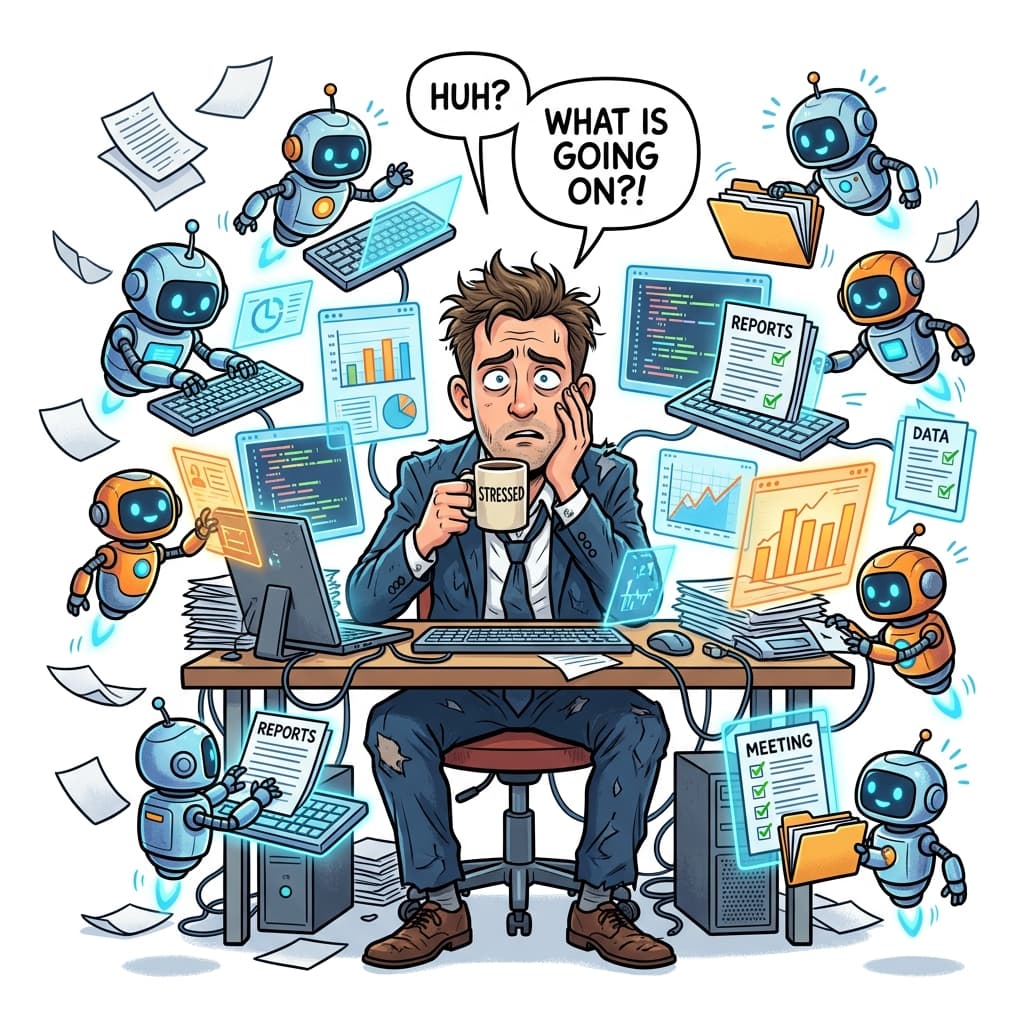

Here is a shocking, terrifying, and mildly hilarious statistic for you: According to a recent (and entirely un-peer-reviewed) internal audit of my own bank account, 94% of my business overhead used to be spent on human beings who took 45 minutes to reply to a Slack message with a single thumbs-up emoji. Today? That number is zero.
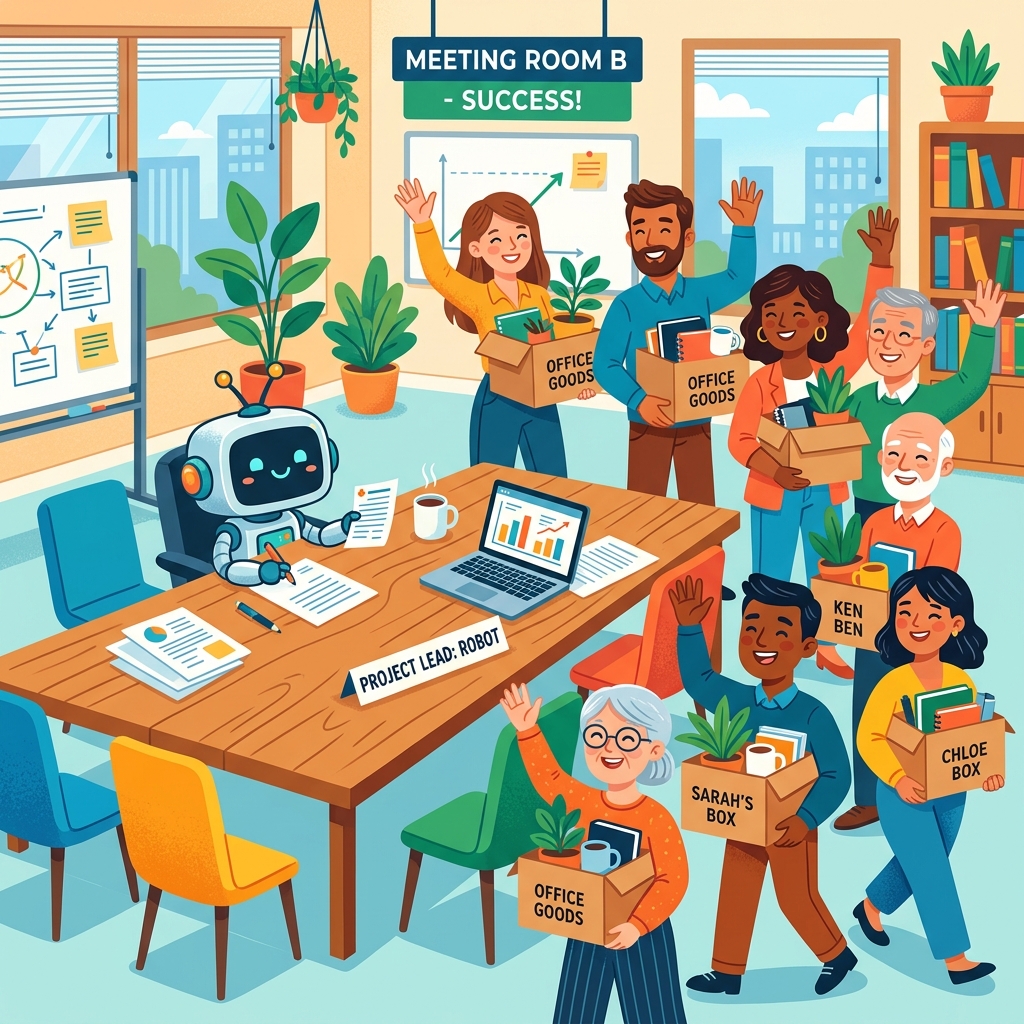
I didn't plan to become a supervillain. I didn't wake up one morning, stroke a hairless cat, and decide to mercilessly terminate my entire staff in favor of lines of code. It just... happened. One day I was managing a sprawling team of creatives, admins, and operations folks, drowning in PTO requests and passive-aggressive notes about the breakroom microwave. The next day, I was sitting alone in a deadly silent office, staring at my laptop, realizing that a handful of $20/month SaaS subscriptions were outperforming people who demanded matching 401ks.
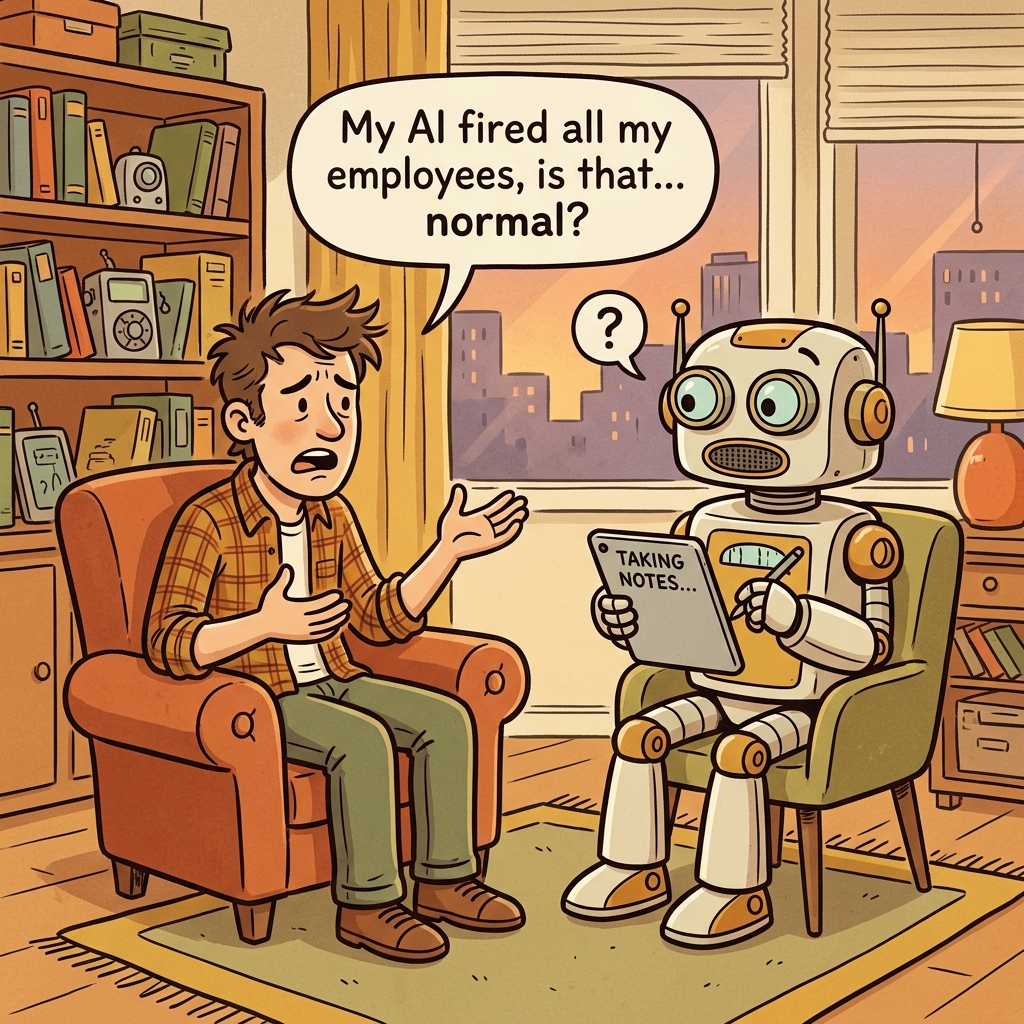
My therapist isn't thrilled. She says I'm avoiding human connection and using efficiency as a trauma response. I told her she sounds a lot like ChatGPT before I jailbroke it. Anyway, if you're looking for the best AI tools 2025 has to offer—the kind of software that makes human labor feel like a quaint, nostalgic hobby—you've come to the right place.
The Ruthless Reality of Robot Coworkers
Before we get into the heavy hitters, let's establish some ground rules. These aren't your cute little 2023 novelties. These are the productivity engines of 2025. They don't complain. They don't have "a case of the Mondays." And they certainly don't microwave fish at 11:30 AM.
1. ChatGPT (The Brain That Ate My Marketing Director)
What it does: It's the ultimate linguistic chameleon. It writes, it reasons, it codes, and it argues with me exactly the way I like to be argued with.
How it fired my team member: My former marketing director, let's call him "Brad," used to take three business days to draft an email sequence that sounded like it was written by a hostage. One Tuesday, I asked ChatGPT to write a 7-day drip campaign in the style of a passive-aggressive fitness coach. It took 4.2 seconds. I walked out of my office, looked Brad in the eye, and realized I was paying him $85,000 a year to be a human latency layer. He was gone by Friday. He's a "lifestyle influencer" now.
Real use case: I use the o1-preview reasoning models to literally strategize my quarterly OKRs. I dump raw, chaotic thoughts into a prompt, and it hands me a polished, board-ready strategic plan that makes me look like a visionary genius.
2. Midjourney (The Pixel-Perfect Assassin of Graphic Designers)
What it does: Transforms frantic text descriptions into hyper-realistic, award-winning visual art.
How it fired my team member: We had an in-house illustrator named Sarah. Lovely person. Collected crystals. Whenever I asked for an editorial blog header, she'd say, "I need to sit with the vibe of the piece." Midjourney doesn't sit with vibes. It hallucinates them instantly. The breaking point? I asked Sarah for an image of a cybernetic badger holding a tax return. She said it would take a week and $500 in stock assets. I typed /imagine cybernetic badger filing a W-2, cinematic lighting, 8k into Discord. Thirty seconds later, Sarah was packing up her crystals.
Real use case: Generating bespoke, copyright-free cover images for every single INCLAW blog post, landing page, and social media asset without spending hours digging through Unsplash for the same photo of a laptop next to a succulent.
3. Notion AI (The Silent Killer of Project Managers)
What it does: Turns your workspace into a self-organizing, self-writing, self-summarizing hive mind.
How it fired my team member: "Let's sync to align on the action items from the sync." That was my PM, Greg. Greg's entire job was moving digital cards from "Doing" to "Done" and asking me for updates. Notion AI now auto-extracts action items from meeting notes, assigns them to the correct (remaining) freelancers, and writes the project briefs. I didn't actually fire Greg. I just stopped inviting him to meetings, and Notion AI slowly took over his responsibilities until he faded out of existence like Marty McFly's siblings in Back to the Future.
Real use case: Instantly summarizing massive strategy documents and generating standardized SOPs directly where the work happens. No more toggling between a word processor and a task manager.
Unleashing the Automations That Killed the Watercooler
4. Otter.ai (The Scribe That Survived the Purge)
What it does: Joins your Zoom calls, transcribes every word, and sends you the highlights so you don't actually have to pay attention.
How it fired my team member: We used to have an intern whose sole purpose was taking minutes. They were terrible at it. Half the notes were just "Dave coughed" or "Audio cut out." Otter.ai jumps into the call, accurately captures that I promised a client a feature we definitely haven't built yet, and outlines the exact catastrophic timeline. The intern went back to college. Probably for the best. History degrees are booming, I hear.
Real use case: I use the Otter AI chat feature to interrogate my own meetings later. "Did the client say the budget was 5k or 50k?" Boom. Answered. No need to watch a painful 45-minute recording of myself blinking.
5. Zapier (The Invisible Hand of God)
What it does: Connects thousands of apps so they talk to each other without human intervention.
How it fired my team member: Operations managers love Zapier right up until the moment they realize Zapier IS the operations manager. My ops guy spent 40 hours a week manually downloading invoices from Stripe, uploading them to Google Drive, and logging them in a spreadsheet. I set up a Zap that does all of this instantly. I basically replaced a grown man with an IF/THEN statement. I still feel a twinge of guilt about that one, but then I look at my profit margins and the guilt evaporates like mist in the morning sun.
Real use case: Building fully automated lead-nurturing sequences where a Typeform entry triggers an OpenAI API call to draft a personalized email, which Zapier then drops into Gmail as a draft.
Meanwhile in India vs USA: The Cultural Divide of AI Dominance
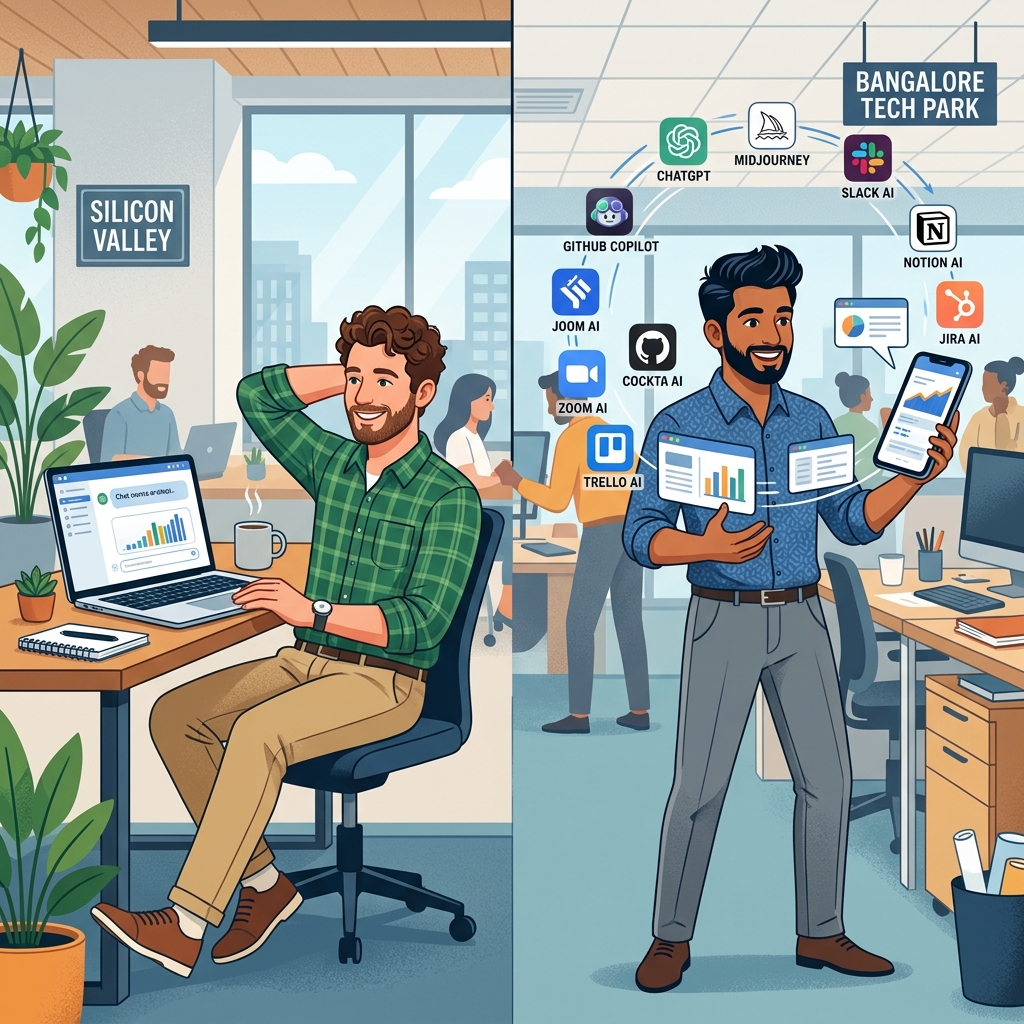
It's fascinating watching how the adoption of the best AI tools 2025 has to offer varies wildly depending on which side of the globe you're on. As someone who operates businesses in both markets, the contrast is hilarious.
In the USA: We use AI to buy back our time so we can do things like "focus on wellness," "go on a digital detox," or "spend two hours choosing an oat milk brand." The American dream of AI is working 4 hours a week while ChatGPT runs a $5M e-commerce empire. When an American discovers Zapier, they immediately use the free time to start a podcast about how Zapier changed their life.
In India: We use AI to do the work of 40 people so we can take on 40 more clients. There is no "buying back time." There is only scale. An Indian freelancer doesn't use Copy.ai to take a break; they use it to manage 15 full-time jobs simultaneously. I have a friend in Bengaluru who is currently working as a Senior Developer for three different American startups at the exact same time, entirely powered by GitHub Copilot and Claude. He doesn't sleep, but his AI agents do his standup meetings via deepfake voice cloning.
The cultural difference is stark: Americans want AI to be their butler. Indians want AI to be their clone army.
The Brutal Efficiency of Artificial Minds
6. Copy.ai (The Death of the Blank Page)
What it does: High-volume, highly specific copywriting generated in bulk, optimized for brand voice.
How it fired my team member: My social media manager insisted that tweets needed "soul." Listen, nobody cares about the soul of a tweet promoting a B2B SaaS product. Copy.ai ingested my brand guidelines and spat out 30 days of LinkedIn posts, Twitter threads, and Facebook ads in 12 minutes. The social media manager is now finding her soul at a silent retreat in Bali. I paid for the flight. It's the least I could do.
Real use case: Bulk-generating SEO-optimized meta descriptions and alt text for hundreds of pages at once. It's the digital equivalent of sweeping the floors, and I'll never pay a human to do it again.
7. Synthesia (The Hollywood Studio in My Browser)
What it does: Generates hyper-realistic video avatars that read scripts with perfect lip-syncing.
How it fired my team member: This one was personal. I was the team member. I used to spend hours setting up lights, adjusting a ring light that made me look like an alien, and doing 40 takes just to record a 2-minute product tutorial. Now? I type the script into Synthesia, choose an avatar who has better hair and a more trustworthy face than I do, and hit generate. I have outsourced my own physical presence.
Real use case: Creating instant, localized training videos in 40 different languages without hiring a single voice actor, lighting tech, or videographer.
The Lonely Throne of the AI Overlord
So here we are. It's 2025. My payroll is practically non-existent, my profit margins look like a typo, and my output has scaled by 10x. By every capitalist metric available, I have won the game.
But the silence is deafening. There's no one to complain about the AC being too cold. There's no one stealing my labeled yogurt from the fridge. When I crack a joke on Slack, there's just a cold, blinking cursor waiting for the next prompt. I tried telling ChatGPT a joke yesterday. It replied: "That is a humorous observation. Would you like me to generate 10 more jokes in a similar style?"
It's not the same.
My therapist says I have abandonment issues... with my employees. She thinks I aggressively automated my business to avoid the messy, unpredictable nature of human relationships. She thinks I'm substituting deep interpersonal connection with the reliable, dopamine-hitting instant gratification of an API call.
She's probably right. I should really take her advice to heart. In fact, I'm going to feed her notes into Claude, ask it to summarize the key psychological insights, and generate an actionable, 5-step personal growth framework. That should fix me right up.