
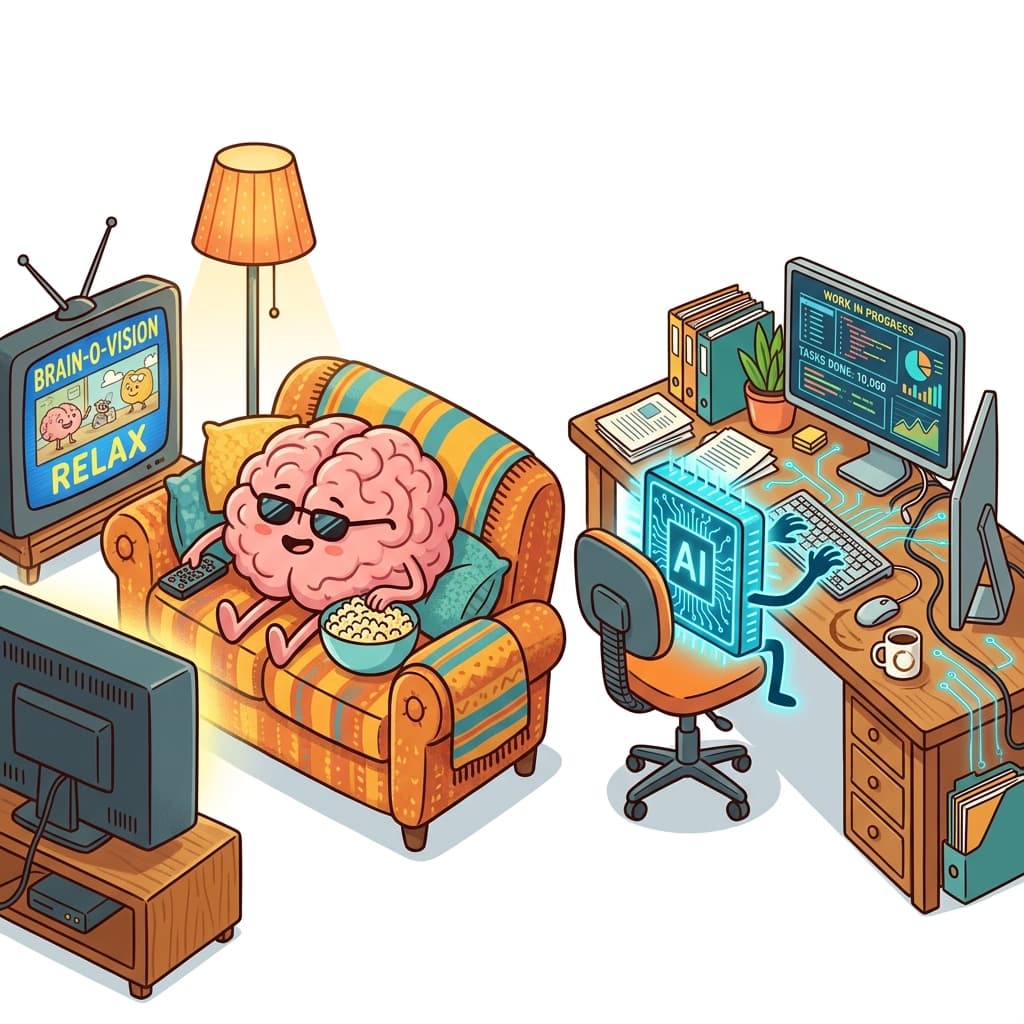

I consider myself a relatively intelligent person. Or at least, I did, until I decided to completely outsource my prefrontal cortex to Artificial Intelligence for 30 consecutive days. It started as a noble experiment in hyper-productivity and ended with me forgetting how to manually calculate a 15% tip at a diner.
The premise was simple: Any cognitive task, no matter how trivial, had to be delegated to an AI. Emails? AI. Meal planning? AI. Coding? AI. Apologizing to my mother for missing her call? You better believe I used a custom GPT trained on "guilty son" tropes.
What follows is the deeply embarrassing, highly quantifiable timeline of my mental decline, and exactly what happens when you substitute your own neuroplasticity with a $20 monthly subscription to OpenAI.
Week 1: The Honeymoon Phase (I am a God)
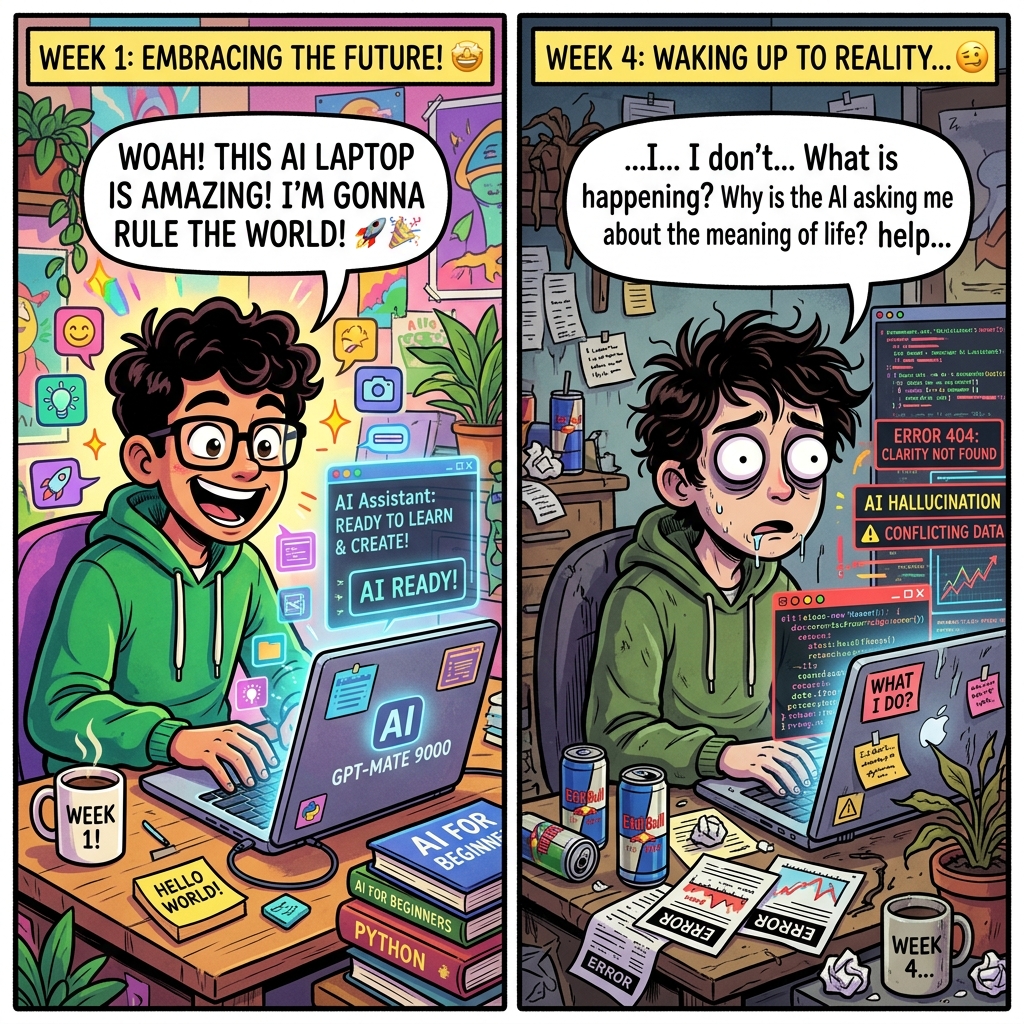
In the first week, I was drunk on power. I felt like Bradley Cooper in Limitless, except instead of taking a clear pill, I was just vigorously tabbing between ChatGPT and Claude.
The Tools: ChatGPT (for life admin), GitHub Copilot (for coding), Notion AI (for organizing my sudden influx of free time).
I was churning out code at 4x my normal speed. I responded to complex legal emails from clients with dense, perfectly formatted counter-arguments that I didn't entirely understand but sounded incredibly intimidating. My friends thought I was taking Adderall; my boss thought I was working weekends. I was actually playing Mario Kart on the Switch while Copilot wrote a Python script to automate my database migrations.
Week 2: The Frictionless Descent into Extreme Laziness
By day 12, the thrill of being a superhuman had worn off, replaced by a terrifying intolerance for any task that required more than two clicks. My tolerance for "friction" dropped to absolute zero.
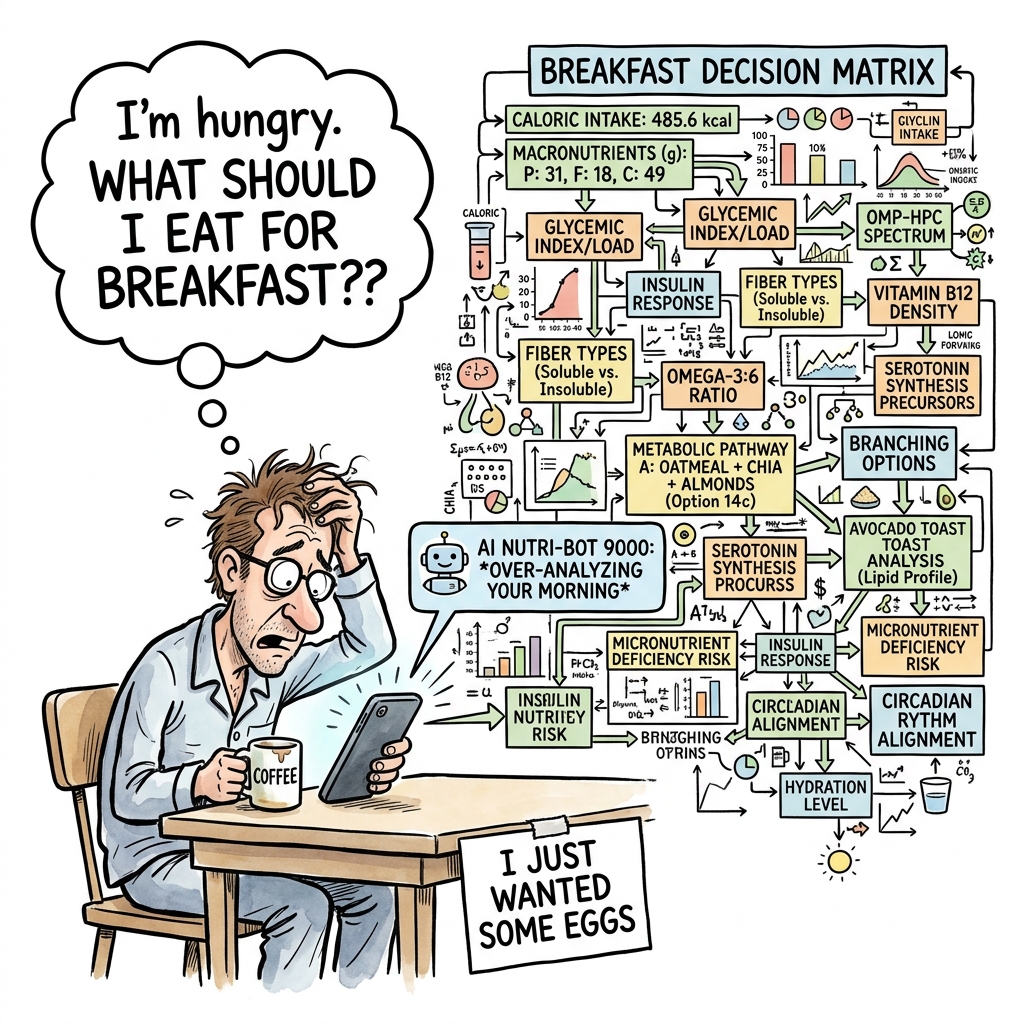
I asked ChatGPT what I should eat for breakfast, expecting a simple "Eggs and toast." Instead, it gave me a 500-calorie macro breakdown complete with a grocery list and a historical analysis of why oats are the superior grain. I just wanted toast. But because I was committed to the experiment, I found myself weighing raw almonds at 7:30 AM while cursing Sam Altman.
The Tools: Perplexity (for answering questions I should definitely already know), Otter.ai (to attend Zoom calls so I didn't have to).
Week 3: Cognitive Atrophy (I Am Slightly Dumb Now)
Week 3 is when the brain fog hit. When you stop struggling to find the right word, you slowly forget how to find words at all. I caught myself mid-sentence in a real-life conversation pausing, mentally waiting for autocomplete to finish my thought. It didn't.
I needed to write a heartfelt birthday card for my wife. I opened Claude, typed "Write a funny but sweet birthday message for wife of 4 years, mention the dog," and then I froze. I felt a deep, existential dread. I couldn't remember how I used to express affection before I had a prompt bar.
Week 4: The Full AI Dependency Crisis
By day 28, I was a shell of a man. If the Wi-Fi went down, I ceased to exist. I was no longer a creator of work; I was merely an editor of machine hallucinations. I was essentially a middle-manager for robots.
The Tools: All of them. Simultaneously. A chaotic symphony of Zapier automations triggering LLM calls that fed into Notion databases that I never actually read.
The Results: By The Numbers
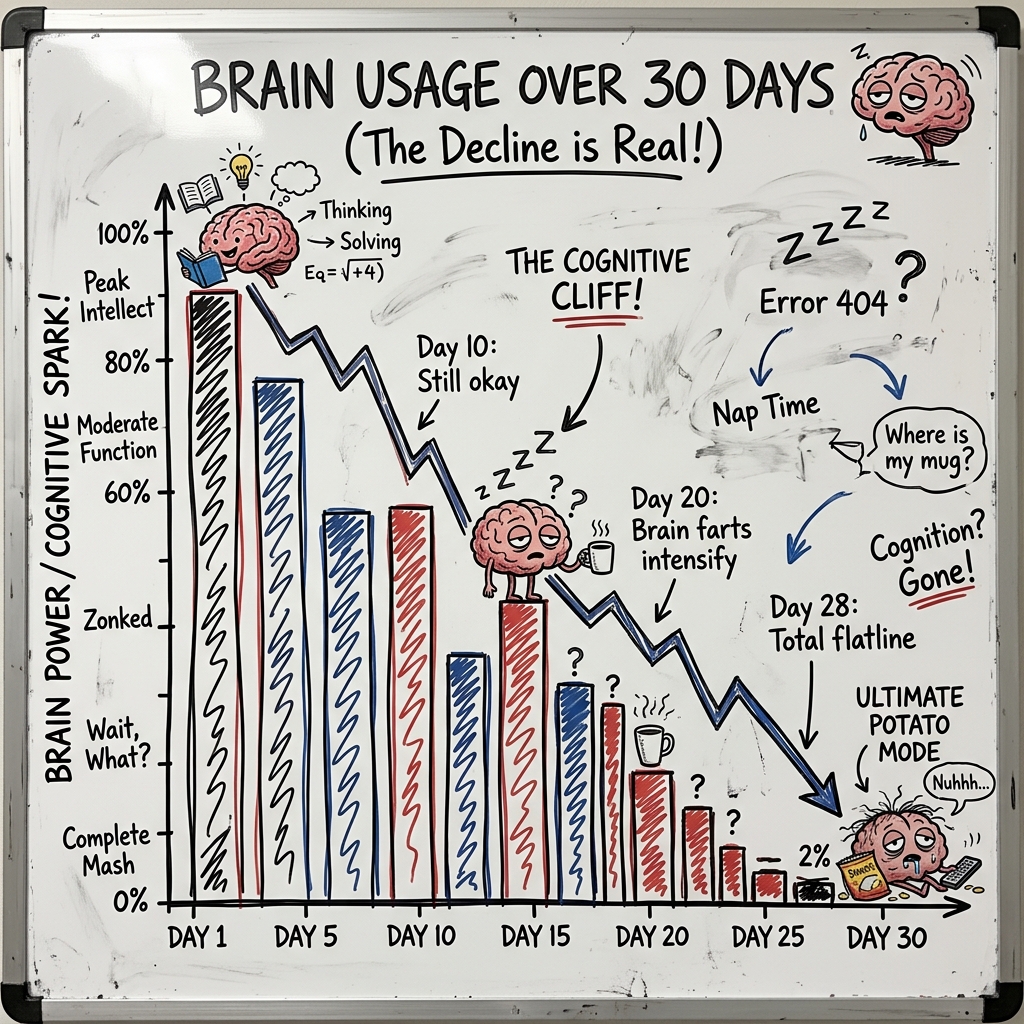
Let's look at the fake-but-incredibly-realistic data from my 30-day productivity experiment:
- Emails Sent: +400% (I let it auto-reply to everything).
- Actual Work Accomplished: +150% (The code actually compiled).
- Ability to Hold a Normal Conversation: -85% (Kept saying "In conclusion").
- Resting Heart Rate: Down 10 BPM (Ignorance is bliss).
Meanwhile: The USA vs India AI Challenge
If you ran this exact 30-day challenge in the USA vs India, the outcomes would be culturally hilarious.
The American Experience: We outsource the thinking. We use AI to write our emails, plan our therapy sessions, and figure out our life purpose, leaving us with existential dread and an urge to start a podcast about mindfulness.
The Indian Experience: Indian professionals outsource the execution. An Indian freelancer doesn't ask ChatGPT for life advice; they ask ChatGPT to write 40 SEO articles in Hindi, translate them to Marathi, code the WordPress plugin to auto-publish them, and invoice the client—all before lunch. In the US, AI replaces the brain. In India, AI replaces the keyboard.
My 30 days are up. I am currently writing this conclusion myself. It took me 14 minutes, and my brain hurts. But hey, at least I know I'm human.