

Everyone says AI is changing everything. Fair enough. But the real question is not whether AI is useful. The real question is which free AI tools are actually worth your time. That is where most people get stuck.
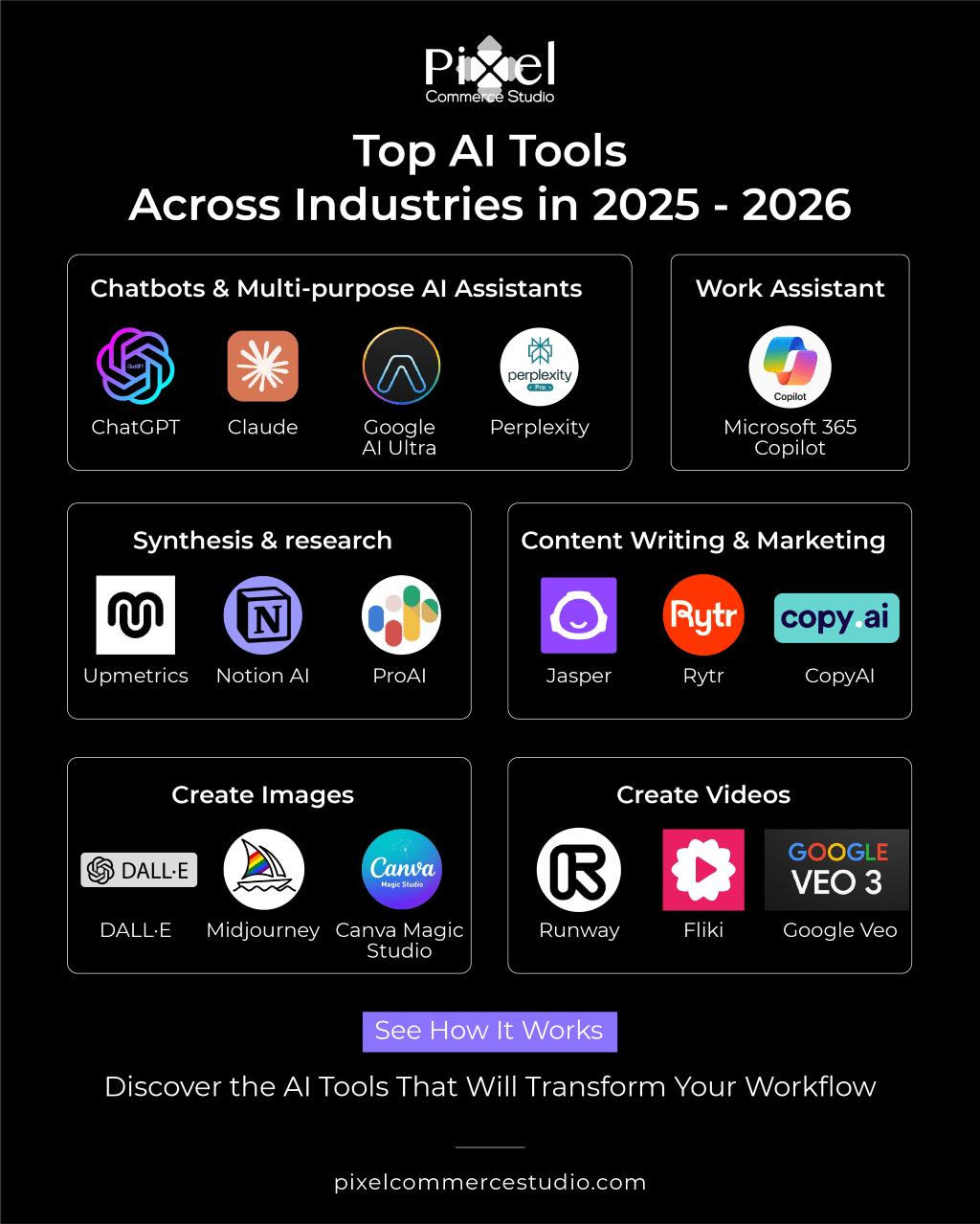
Some tools look impressive for five minutes and then become annoying, limited, or overly complicated. Others quietly save hours every week. In this guide, I am going to keep it simple and practical. You will see the best free AI tools in 2026 for writing, research, design, productivity, and content creation, plus a clear idea of which tool is best for what kind of work. ChatGPT, Claude, Gemini, Copilot, Perplexity, Canva, Adobe Express, Grammarly, and CapCut all offer free access or free-tier options with different strengths.
If you are building Inclaw into a site people trust for practical AI and productivity content, this kind of post is perfect for topical authority because it is broad enough to rank, but focused enough to stay useful. That is exactly how a pillar post should behave.
What are the best free AI tools in 2026?
The best free AI tools in 2026 are the ones that let you do real work without forcing you to upgrade immediately. In practical terms, that means tools for chat, writing, research, design, and video creation that offer a free plan, a free tier, or free-to-start access. ChatGPT, Claude, Gemini, Copilot, Perplexity, Canva AI, Adobe Express, Grammarly, and CapCut all fit that description in some form.
The simple rule is this: do not chase the fanciest tool. Use the tool that removes the most friction from your daily work. If you write content, you need a strong writing assistant. If you research topics, you need an answer engine. If you create visuals, you need a design tool. If you make short videos, you need a fast video generator. That is the whole game.
1) ChatGPT: best all-around free AI tool for everyday use
If I had to pick one free AI tool for most people, ChatGPT would be the first stop. OpenAI says ChatGPT is free to use, and the free tier includes a broad set of capabilities such as web search, data analysis, image and file uploads, and access to GPTs in the GPT store. That makes it useful for brainstorming, writing, summarizing, planning, and general problem-solving.
What makes ChatGPT strong is not just the chat experience. It is the range. You can use it to draft blog outlines, rewrite messy notes, simplify complex topics, and ask follow-up questions without restarting the whole process. It is a general-purpose tool, which is exactly why so many people begin there. OpenAI also positions ChatGPT as an AI chatbot for everyday use and offers a free sign-up flow on the main product page.
Best for: writing, brainstorming, homework help, idea generation, and quick explanations.
2) Claude: best free AI tool for long-form thinking and clean writing
Claude is a strong choice when you want thoughtful responses and smoother long-form work. Anthropic’s help center says Claude has a free plan with limited usage, and its plan page shows a free tier alongside paid options. Anthropic also offers Claude Code with Pro or Max plans, which signals that Claude is positioned heavily around serious work and coding tasks as well.
For writers, bloggers, and researchers, Claude feels especially useful when you need a clear structure and a more natural flow. It is a good tool for turning rough ideas into readable drafts, cleaning up explanations, and working through longer prompts without losing the thread too quickly. Usage is limited on the free plan, so it is best treated as a focused work tool rather than an unlimited replacement for everything.
Best for: long-form writing, analysis, editing, and structured thinking.
3) Gemini: best free AI tool for Google-style productivity
Gemini is Google’s AI assistant, and the free experience is built around help with writing, planning, brainstorming, and more. Google also says the Gemini app has a desktop app available globally for free on supported macOS versions, which makes it easier to use outside the browser.
Gemini is a smart choice if you already live in the Google ecosystem. It feels like a natural fit for quick drafting, planning tasks, and lightweight productivity. Google also offers paid tiers with extra usage and features, but the free version is already useful for everyday work. That makes Gemini a strong competitor in the “free AI tools that actually get used” category.
Best for: productivity, planning, writing help, and Google ecosystem users.
4) Microsoft Copilot: best free AI tool for quick answers and web tasks
Microsoft Copilot is another solid free option, and Microsoft describes the free version as ideal for general questions, first-time AI users, and web-based tasks. Microsoft also says you can access it in the browser, as a desktop or mobile app, and through Copilot in Edge.
Copilot is useful when you want something straightforward and low-friction. It is not trying to be a complicated creative studio. It is trying to help you ask questions, get fast answers, and move on. That is a real advantage if your workday is packed and you just need useful output without a lot of setup.
Best for: quick research, general questions, and people who want a simple AI assistant.
5) Perplexity: best free AI tool for research and fact-finding
Perplexity describes itself as a free AI-powered answer engine that gives accurate, trusted, real-time answers. That makes it especially attractive for research-heavy work where you want a response that feels closer to search plus synthesis than plain chat.
This is the tool I would use when I need to move quickly through a topic and understand what is going on without opening twenty tabs. Perplexity also offers Pro options, but the free experience is already built around fast answers and search-style exploration. That is why it fits so well into a workflow for bloggers, students, marketers, and creators.
Best for: research, summaries, source discovery, and fast answer lookup.
6) Canva AI: best free AI tool for design and social content
Canva remains one of the easiest creative tools to recommend because its AI features are built into a familiar design workflow. Canva says its AI assistant can help visualize ideas, generate text, and produce designs in one place, and it also says its AI tools are available on the free plan with more advanced features on paid plans. Canva also offers free AI tools like Magic Design and other AI-assisted creative features.
For most people, Canva wins because it removes the “blank page” problem. You are not starting from zero. You are starting from a prompt, a template, or a rough idea that can become a post, presentation, poster, or simple visual fast. That is exactly why Canva is so popular for creators and small businesses.
Best for: social posts, presentations, thumbnails, posters, and simple brand visuals.
7) Adobe Express and Firefly: best free AI tools for polished visuals
Adobe Express says you can use AI to generate images, videos, social posts, and more, and Adobe also confirms that the free plan includes basic AI design tools. Adobe Firefly’s free text-to-image tool also lets users create AI-generated images from prompts.
This matters because a lot of content needs more than text. A blog cover, social graphic, or thumbnail can decide whether people click or scroll past. Adobe Express and Firefly make it easier to produce cleaner-looking assets without needing advanced design skills. That is valuable for solo creators and small teams who want quality without hiring a designer for every little thing.
Best for: AI images, visual assets, branded graphics, and quick content design.
8) Grammarly: best free AI tool for writing polish and cleaner copy
Grammarly’s AI writer is designed to help people overcome writer’s block by generating text for social media, websites, blogs, cover letters, taglines, and more. Grammarly also offers a free AI writer and a free AI humanizer that helps turn robotic text into something more natural and engaging.
That makes Grammarly useful at the very end of your writing workflow. Chat tools are great for getting a draft started, but they are not always great at sounding like a real person. Grammarly helps close that gap. If your goal is cleaner, smoother, more human copy, this is one of the easiest free tools to keep in your stack.
Best for: polishing text, fixing tone, and making AI writing sound more human.
9) CapCut: best free AI tool for fast video creation
CapCut’s AI video generator says it can create videos with avatars, templates, text-to-video, and automated storyboarding. CapCut also says its AI video maker can automate scriptwriting, voiceovers, scene generation, and editing, and that users can create and share AI-generated videos for free.
This one is especially useful for short-form content. If you want to make social videos fast, CapCut lowers the barrier a lot. It is built for creators who need to move quickly, not for people who want to spend hours learning complicated editing software.
Best for: short videos, promo content, social clips, and quick AI-assisted editing.
Which free AI tool should you choose first?
The answer depends on your daily job.
If you want one tool that can do almost everything, start with ChatGPT. If you want cleaner long-form writing, try Claude. If you live in Google apps, Gemini is a smart fit. If you want research and fast answers, Perplexity is excellent. If you need visual content, Canva and Adobe Express are the easiest places to start. If your writing needs to sound more human, Grammarly is a strong finishing tool. If video is your game, CapCut is the fast lane.
A simple setup for most people would be this: use ChatGPT or Claude for drafting, Perplexity for research, Canva or Adobe Express for visuals, Grammarly for final polish, and CapCut for video. That mix gives you a real workflow instead of a random pile of AI tabs.
FAQ
Are free AI tools enough for serious work?
Yes, for many tasks they are enough. The free tiers of ChatGPT, Claude, Gemini, Copilot, Perplexity, Canva, Grammarly, Adobe Express, and CapCut all provide useful starting points. The main difference is usually usage limits, feature limits, or advanced controls on paid plans.
What is the best free AI tool overall?
For most people, ChatGPT is the strongest all-around starting point because its free tier includes a wide range of capabilities, including web search, data analysis, file and image uploads, and GPTs. That makes it useful across more situations than a single-purpose tool.
Which free AI tool is best for research?
Perplexity is the clearest choice for research because it is designed as a free AI answer engine with real-time answers. It feels closer to search plus synthesis than a traditional chatbot.
Conclusion
Free AI tools are not just a trend anymore. They are becoming part of how people write, research, design, and create every day. The smartest move is not to use everything. The smartest move is to build a small stack that fits your work.
For most users, the best starting combo is simple: ChatGPT for drafting, Perplexity for research, Canva or Adobe Express for visuals, Grammarly for polish, and CapCut for video. That setup covers most content needs without forcing you to pay right away.
If you are building Inclaw’s AI section, this is also a strong pillar topic because it naturally leads to cluster posts like “Best AI Tools for Students,” “Best AI Tools for Blogging,” “Best AI Tools for YouTube,” and “ChatGPT vs Claude vs Gemini.” That is the kind of connected content structure that builds topical authority over time.
Author Bio:
Ansh writes about AI tools, SEO, and practical productivity for Inclaw. His focus is simple: find useful tools, explain them clearly, and help readers save time without the fluff.