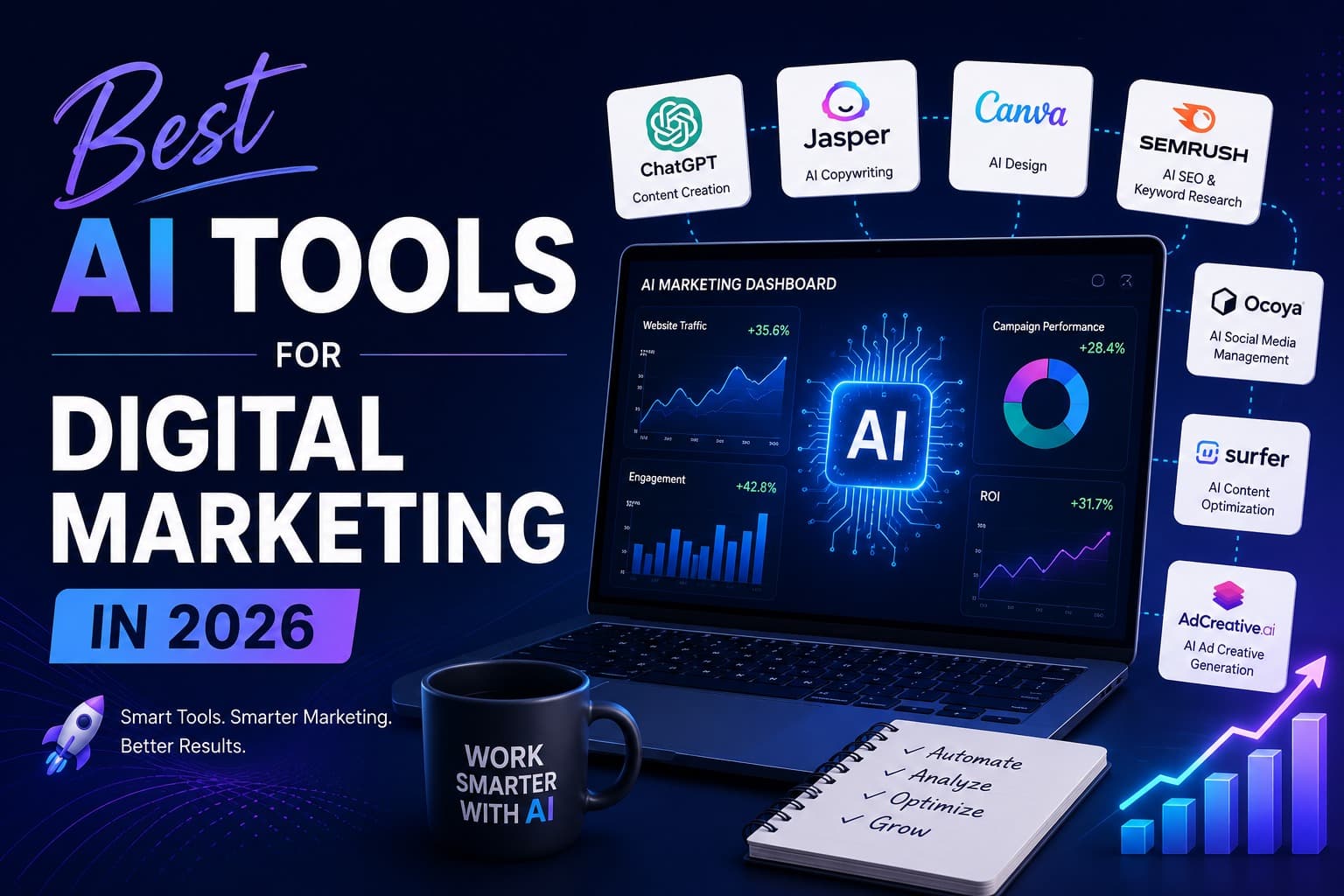

Best AI Tools for Digital Marketing in 2026: What Marketers Need to Know
Artificial intelligence is no longer an experimental technology in marketing. According to recent industry reports, more than 80% of marketing teams now use at least one AI-powered platform in their daily workflow. Yet many businesses still make the same mistake: they adopt tools without understanding which problems those tools are designed to solve.
The result is predictable. Teams spend money on subscriptions, create more content, and automate more tasks, but fail to improve results. The real advantage comes from choosing the right AI tools for specific marketing objectives.
In this guide, we’ll look at the best AI tools for digital marketing in 2026, how they fit into modern workflows, and where they deliver measurable value.
Why AI Has Become Essential for Modern Marketing
Digital marketing has changed dramatically over the past few years. Consumers interact with brands across multiple channels, from search engines and social media platforms to email campaigns and messaging apps.
Managing all these touchpoints manually is difficult. AI helps marketers process large volumes of data, identify patterns, and complete repetitive tasks faster.
For example, a content team producing 30 blog articles per month can use AI-assisted research and outlining tools to reduce preparation time by nearly 50%. Similarly, PPC managers can analyze thousands of keyword variations within minutes rather than spending hours reviewing spreadsheets.
Some of the most valuable AI categories include:
• Content creation tools
• SEO research platforms
• Advertising optimization software
• Customer service chatbots
• Analytics and reporting systems
• Email marketing automation solutions
The goal is not replacing marketers. It is helping them focus on strategic decisions while software handles repetitive processes.
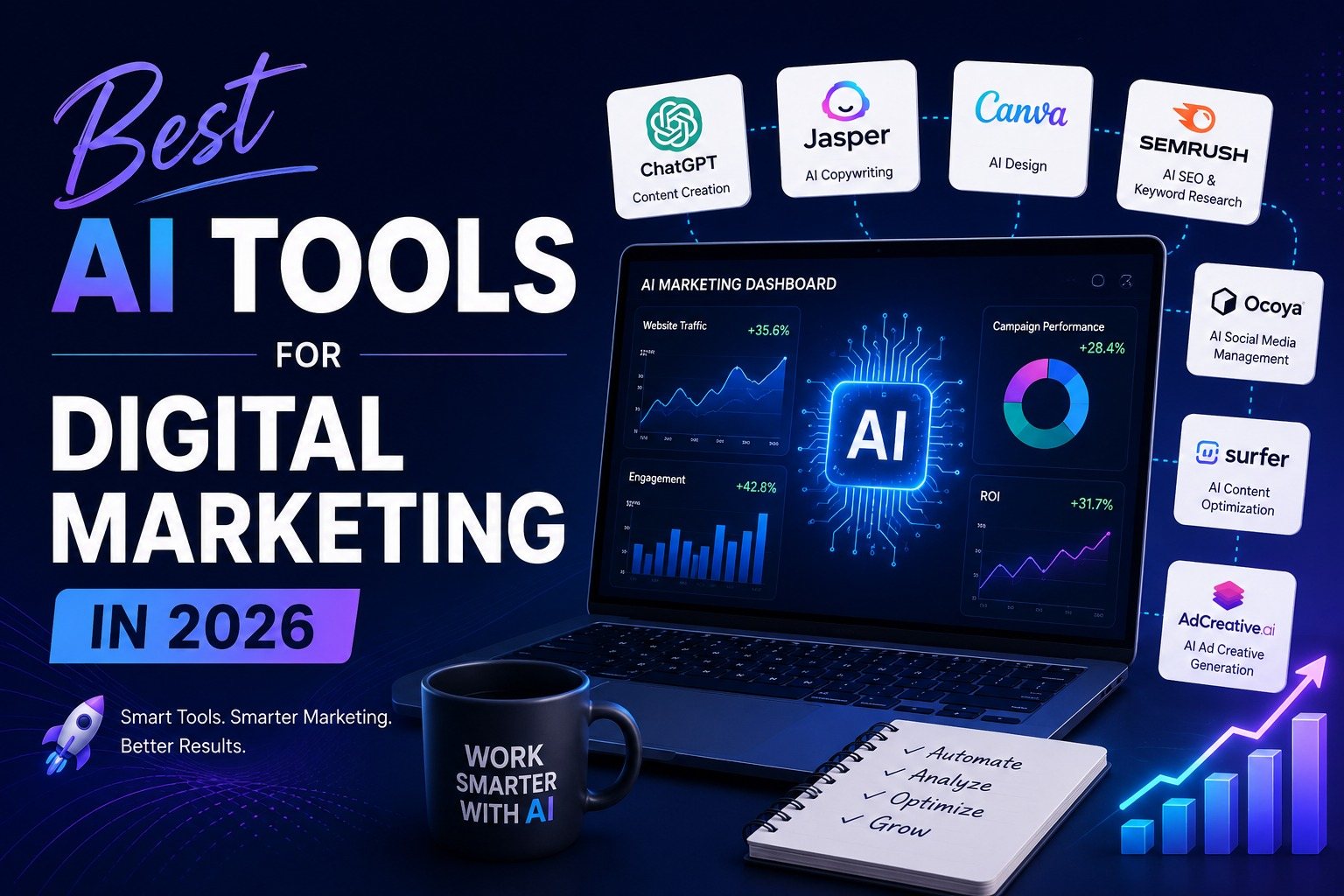
AI Content Tools That Save Time Without Sacrificing Quality
Content marketing remains one of the strongest drivers of organic traffic, but producing quality content consistently is challenging.
AI writing assistants have become significantly better in 2026. They can generate outlines, suggest headlines, summarize research, and create first drafts in minutes.
Popular options include ChatGPT, Claude, Jasper, and Copy.ai. Each offers unique strengths depending on content requirements.
Consider a marketing agency managing 15 clients simultaneously. Instead of spending three hours researching every article topic, writers can use AI tools to gather initial insights, identify common questions, and organize information more efficiently.
However, human review remains critical. Search engines increasingly reward expertise, originality, and practical experience. AI-generated content performs best when marketers add industry knowledge, examples, and unique perspectives.
Teams that combine AI efficiency with human expertise often produce content 40% faster while maintaining editorial standards.
SEO and Search Intelligence Platforms Driving Better Rankings
Search engine optimization has become more data-driven than ever.
Modern AI-powered SEO platforms help marketers identify keyword opportunities, monitor competitors, predict ranking potential, and optimize content more accurately.
Tools such as Semrush, Ahrefs, Surfer SEO, and Clearscope use machine learning to analyze thousands of ranking signals and content patterns.
Imagine a business targeting a competitive keyword with monthly searches exceeding 10,000. Traditional optimization methods may require weeks of testing. AI-powered SEO software can identify content gaps, recommended subtopics, and semantic relevance indicators within minutes.
These insights help marketers create pages that align more closely with user intent.
Another major benefit is predictive analysis. Instead of reacting to ranking changes after they occur, marketers can identify potential issues before traffic declines.
As search algorithms continue evolving, AI-assisted SEO provides a practical way to make data-backed decisions rather than relying on assumptions.
How Agencies and Businesses Are Using AI to Improve Campaign Performance
AI is delivering some of its biggest gains in advertising and campaign management.
Platforms like Google Ads, Meta Ads, and LinkedIn Ads increasingly rely on machine learning to optimize bidding strategies, audience targeting, and creative performance.
A common scenario involves businesses running campaigns across multiple channels with limited internal resources. AI can automatically adjust bids based on conversion probability, reducing wasted spend while improving results.
Many agencies now use AI-driven reporting tools that process data from multiple platforms and generate insights automatically. Instead of manually compiling reports every month, teams can focus on interpreting results and planning improvements.
For many businesses, the challenge isn't finding AI tools—it's understanding which platforms align with their objectives and how to use them effectively. A tool that generates excellent results for an online retailer may not be suitable for a healthcare provider or local service company. Businesses that need guidance often consult experienced agencies such as website designing company in Gurgaon to evaluate AI solutions, integrate them into existing marketing workflows, and measure results against real business goals. The focus should always be on improving performance, not simply adding another subscription to the marketing stack.
This trend is particularly noticeable among growing businesses seeking expert support from specialists. Working with an experienced Digital Marketing Agency in Gurgaon can help organizations combine AI capabilities with strategic planning, ensuring technology supports business goals rather than creating additional complexity.
A Practical Framework for Choosing AI Marketing Tools
With hundreds of platforms available, selecting the right tools can feel overwhelming.
Start by identifying one specific problem.
For example:
• Low content production speed
• Poor email engagement
• Rising advertising costs
• Inconsistent lead quality
• Limited reporting visibility
Once the challenge is clear, evaluate tools against three criteria:
Time savings
Data accuracy
Ease of integration
Run a 30-day trial whenever possible. Measure outcomes using actual business metrics rather than relying on feature lists.
Avoid adopting multiple platforms simultaneously. Many companies subscribe to five or six AI tools but actively use only two. A focused approach generally delivers better results and lower costs.
The best implementation strategy is gradual adoption followed by continuous optimization.
Conclusion
AI is reshaping digital marketing, but success depends on thoughtful implementation rather than blind adoption. The best AI tools for digital marketing in 2026 help businesses create better content, improve search visibility, optimize advertising performance, and make smarter decisions based on data.
Whether you're experimenting with AI for the first time or refining an existing strategy, expert guidance can help you avoid costly mistakes and focus on tools that generate measurable results. Businesses looking for strategic support can benefit from partnering with a trusted Digital Marketing Agency in Gurgaon, ensuring AI investments contribute to sustainable growth and long-term marketing success .